
Ever wonder how massive development projects impact local communities and their homes? If you happen to be affected by one, do you know your rights and the government support that’s due to you? Let’s talk about all that in this blog!
RAP Definition and Its Importance
Before we discuss what RAP is all about, let’s first define what resettlement means.
Woube (2005) describes resettlement as the process by which individuals or a group of people leave spontaneously or un-spontaneously their original residential sites to move to new areas where they can begin new trends of life by adapting themselves to the biophysical, social and administrative systems of the new environment.
Now, what is RAP?
A Resettlement Action Plan (RAP) is a crucial document that comprehensively outlines the procedures and actions required to properly resettle and compensate individuals and communities who are involuntarily displaced or affected by a project. It serves as a guiding framework for all involved stakeholders in planning and implementing resettlement programs. It is is characterized by two main features: an exodus of population; and an element of planning and control.
RAP is more than just a document…
It is a vital commitment from the organizations and companies behind development projects. It outlines their promise and responsibility to ensure that if a project requires people to move, those affected receive the support they need to rebuild their lives sustainably. This includes securing new housing, essential infrastructure, and even access to crucial services like healthcare and education, all designed to help individuals and families thrive in their new beginnings.

Why RAP matters
The creation and implementation of RAP are important as they ensure that projects impacting communities are conducted responsibly and ethically, safeguarding the well-being of those affected.
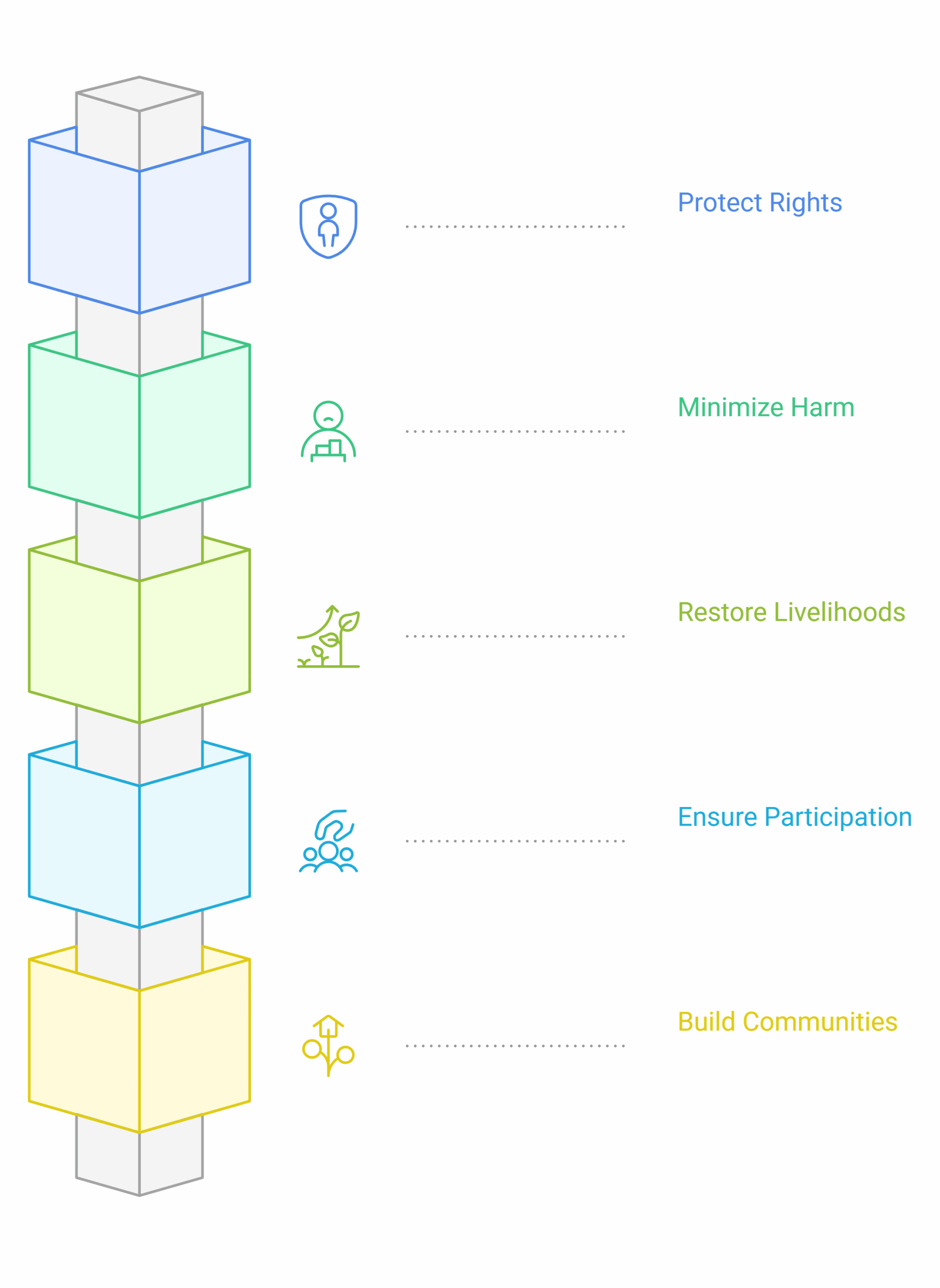
The Foundational Goals of RAP
Protecting Rights and Dignity
RAP is about respecting people’s dignity and their basic right to a safe place to live. It ensures that no one is left without a home or in a worse spot than before.
Minimizing Harm and Compensating Losses
Imagine losing your home and everything you’ve built. A RAP tries to stop or lessen the bad things that happen when people move as much as possible. If some losses can’t be avoided, it makes sure people get fair payment so they can get back on their feet quickly and smoothly, feeling safe in their new surroundings.
Restoring and Enhancing Livelihoods
Moving can mess up lives, including jobs and businesses. A RAP focuses on getting people back on stable financial ground. This means giving not just money but also real help like job fairs or training. The goal is to help people not just get back to what they earned before, but maybe even do better financially after the move.
Ensuring Participation and Transparency
No one likes to have decisions made for them without their say. A RAP pushes for openness and getting everyone involved. It means that the families affected aren’t just told what’s happening. They actively help plan, carry out, and even watch over the moving process. Their needs and worries are heard and dealt with every step of the way.
Building Sustainable Communities
Moving people isn’t just about changing locations; it’s about making a better future. A RAP works to build new neighborhoods that are not only affordable and strong but also have everything people need, like good roads, clean water, and schools. It sees moving as a chance for lasting improvement, making sure that those who move end up in a place that helps them do well for years to come.
When Homes Must Move: The Causes of Resettlement
Resettlement happens for various reasons, often involving the displacement of people, either physically or economically, due to different types of projects, legal actions, or environmental changes. Here are the main reasons why people find themselves needing to resettle:
When Land is Needed for Big Projects
Infrastructure, mining, or urban development projects often require land currently inhabited or utilized, forcing families to relocate. This displacement isn’t limited to homes; it can also mean losing livelihoods, such as access to fishing grounds or forests.
Legal Powers and Tough Choices
Governments or other authorities have the legal power to take land, even if the owners don’t want to give it up. This is often for public projects or what we call expropriation. It can also create situations where people “agree” to sell their land, but only because they know it will be taken anyway if they refuse. And for those who don’t have formal land titles or recognized rights, a project might lead to eviction.

Disasters, Both Natural and Man-Made
Life can also be uprooted by disasters and crises. Think of natural events like typhoons, floods, or volcanic eruptions that suddenly make an area unlivable. Then there are human-caused crises like fires or conflicts. Even the ongoing impacts of climate change are increasingly forcing communities to move to safer ground through planned or emergency relocations.
Urbanization and Development
As cities expand, for instance, urbanization can displace existing communities. Large-scale agricultural expansion might take over lands where people have lived for generations. And sometimes, well-intentioned conservation efforts to protect natural areas can mean that people living within those zones have to move.If you need experienced professionals to guide you in preparing your big project’s Resettlement Action Plan, we’d love to speak with you and see how we can serve you best.
Should you wish to simply send an inquiry about other services including hydrogeological studies, environmental engineering, geotechnical studies, consulting, EIA report preparation etc, you may do so by clicking the button below and our account manager shall get back to you within two (2) business days:
Common Misconceptions of Resettlement Action Plan
Resettlement Action Plans (RAPs) are meant to do good but most people still often get them wrong. So, let’s clear up some common mistaken ideas about what they really are and how they actually help.| Myth | Reality |
| “RAPs are just about paying people for their land.” | Think of a RAP as a complete plan to help people get back on their feet. It’s not just about paying for land or houses. It includes helping families find new ways to earn money, giving them social support, making sure they have access to schools and clinics, and even improving their new communities. The main goal is to make sure affected families are better off, or at least no worse off, than they were before. |
| “Only legal landowners get help.” | A good Resettlement Action Plan (RAP) helps everyone affected by a project, even those without official land titles. This includes families living in informal settlements, renters, or people who rely on shared land for their livelihood. If you lose something because of the project, be it your home, your farm, or your small business, the RAP should offer you support. |
| “Resettlement happens quickly.” | Moving and rebuilding lives takes a lot of time and careful planning. A proper resettlement process involves many steps: talking with families, finding new places to live, building new homes or facilities, and helping people adjust. It’s a complex journey that can last for several years, not just a few weeks or months. |
| “Communities don’t have a say in their own resettlement.” | This couldn’t be further from the truth. A key part of any good RAP is listening to the community. Project developers should have many meetings and discussions with affected families. They ask about what people need, where they’d like to move, and how they can best rebuild their lives.The community’s ideas and concerns are essential for creating a plan that actually works for them. |
| “RAPs only benefit the companies or projects.” | While RAPs do help projects move forward by securing land, their main purpose is to protect and support the people whose lives are affected. When a project handles resettlement fairly and openly, it builds trust with the community. This can prevent conflicts, improve the project’s reputation, and ultimately lead to a more successful and sustainable outcome for everyone involved–the project, the government, and especially the affected families. |
Effective RAP Implementation Strategies

- Regularly inform Project Affected Persons (PAPs)
Continuously sensitize PAPs about changes, alternatives, and timelines to build ownership and prepare them for changes. This communication should be culturally and gender-sensitive.
- Compensate PAPs on time with adequate funds
Ensure sufficient and timely funds for compensation, land acquisition, and all RAP activities to avoid project delays. PAPs should be compensated before land acquisition or property destruction.
- Agree on property valuation
PAPs and the Chief Government Valuer must agree on property valuations. PAPs have the right to appeal to the High Court if they disagree.
- Engage all stakeholders promptly
Consult continuously with PAPs, government bodies, funders, and contractors, especially during valuation.
- Establish a quick grievance process
Set up an efficient system to resolve grievances and disputes fairly, transparently, and quickly, with clear channels and response times.
- Clearly communicate cut-off dates
Announce the cut-off date (for census/inventory) effectively to the affected communities to establish eligibility and prevent new claims.
Building Tomorrow: Resettlement Action Plan in the Future

Ultimately, a Resettlement Action Plan is more than just a document—it’s a commitment to people. It’s easy to get lost in the logistics and legal requirements, but the real measure of a RAP’s success is how it supports individuals and families through a major life change. When approached with care and genuine collaboration, it’s not just about mitigating harm; it’s about creating shared opportunities that build a stronger, more equitable future for everyone involved.
This is precisely why treating a RAP as just another box to check is such a missed opportunity. A thoughtful, well-executed plan is an investment in the project’s own long-term success and its social license to operate. It lays the groundwork for positive community relationships and fosters sustainable development that benefits both the project and the people it affects.
— And that’s how we move from simply building infrastructure to creating lasting value for society!
Download this Full Guide as a PDF, for FREE!
Type your email address below so we can send the file straight to your inbox:
Your free guide is on the way!
Please check your email inbox for your requested PDF. By default, you are now enlisted in our newsletter subscriber list. If you prefer not to be, simply press the unsubscribe link at the bottom of the email that you'll receive from us. Thank you!
